
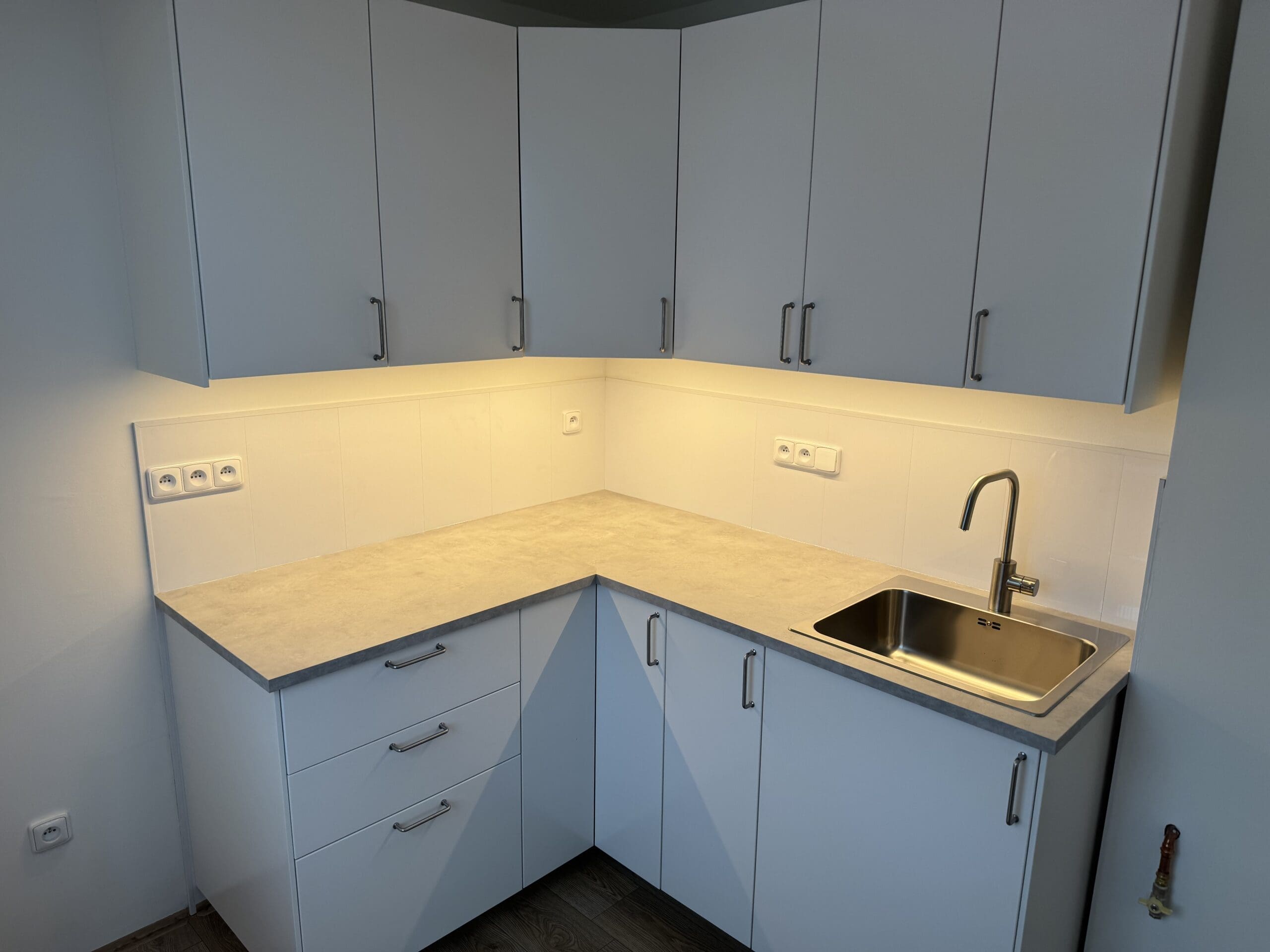
Why IKEA kitchen reviews
in fact, there are no reviews of kitchens
When you type „IKEA kitchen reviews“ into Google, you get a mixture of very positive and very negative experiences. And the more one reads those reviews, the more it can seem like the quality of those kitchens is... questionable. But when I look at it from a practical point of view, after dozens and hundreds of installations all over the Czech Republic, a completely different picture emerges.
It's interesting that virtually all the bad reviews I've seen in that time - and I have a lot of them saved - don't talk about the quality of the kitchen itself. No one writes that the cabinets are falling apart. That the material didn't last. That it stopped working after a year.
On the contrary.
I've seen IKEA kitchens 10, 12, 13 years old where the cabinet interiors, hinges and overall construction looked like they were assembled a few days ago. And that's no coincidence. The system is designed really well and the quality of the materials is, frankly, very high.
The problem almost always arises elsewhere.
And it almost always starts with assembly.
Much of the negative experience has one common scenario. Somehow the kitchen gets installed, something doesn't fit, something doesn't work quite right and the customer starts to make a complaint. This is where it gets complicated.
Because the customer doesn't deal with the installer. It's IKEA.
Phone calls, waiting, passing information between several parties. And in the meantime, a kitchen that's not 100%. And that's where the frustration comes in, which then shows up in the review. And it's these situations that make up a large part of the negative IKEA kitchen reviews. Not because of the kitchen. It's because of how it was built and what followed afterwards.
many people underestimate the planning phase
The kitchen is designed in the planner, everything looks beautiful and clean, but the reality of the apartment or house is completely different.
A typical example is a dishwasher.
Many people have no idea that there must be practically nothing behind the dishwasher. No socket, but most importantly no drain or water supply pulled directly behind it. The dishwasher has to go all the way to the back of the cabinet. As soon as something gets in the way, it starts to come out of line and the whole module stops working as it should.
Now imagine the situation - the kitchen is ordered, everything is ready, the installation begins... and suddenly you find that the drain and water connections are exactly behind the place for the dishwasher.
This is absolutely typical. And that's when the improvisation begins. Shifting, adjusting, finding solutions that shouldn't have been there in the first place.
And the result?
It will never be as clean and precise as if it had been factored in at the planning stage. And it's these situations that then translate into experiences where people write that the kitchen „didn't fit“ or that something didn't work the way they expected.
combining IKEA kitchens with other appliances
And it's not just about the brand, it's about the principle.
The IKEA kitchen works as a system. Everything is designed to fit together precisely - the dimensions, the fit, the spacing, the details. The moment you start adding components that don't belong in the system, it starts to fall apart.
It's similar to buying an Apple computer and deciding to start replacing the internal components. Apple isn't special because it has „better screws“. It's special because everything inside is designed as a single unit. The hardware, the software, every detail. And that's why it works so smoothly.
The moment you start interfering and combining things that don't belong there, the whole thing stops working as it was intended.
And it works the same way for kitchens. As soon as you use an appliance that has a different size, a different fit or a different design, you start to compromise. Somewhere you adjust the cabinet, somewhere you „push“ something, somewhere you create a gap. At first glance, it may not seem like a big deal. But the result will never look as clean and precise as when everything fits exactly right.
And then there's the assembly itself.
In the Czech Republic, it is quite common that the kitchen is assembled by someone who „does everything“. Hourly husband. Today the kitchen, tomorrow the bathroom, the next day the floors.
But IKEA kitchens, especially the METOD system, have their own specifics. And if you don't know them, you start making small inaccuracies that gradually add up. Crookedly placed cabinets. Poorly aligned worktops. Inaccurate cuts. Each of these things on their own may not look dramatic, but together they create a result that doesn't look good.
And again - the customer sees this as a kitchen problem.
Interestingly, when everything is done right - the planning, the space preparation and, most importantly, the assembly - IKEA kitchens look completely different. And that's when we get to why they have so many positive reviews at the same time.
Because the difference between a well and poorly executed assembly is huge.
So when someone reads IKEA kitchen reviews today, they should ask themselves one simple question:
Is this a kitchen review... or an assembly review?
Because in most cases the answer is quite clear.
continue reading
Related Posts
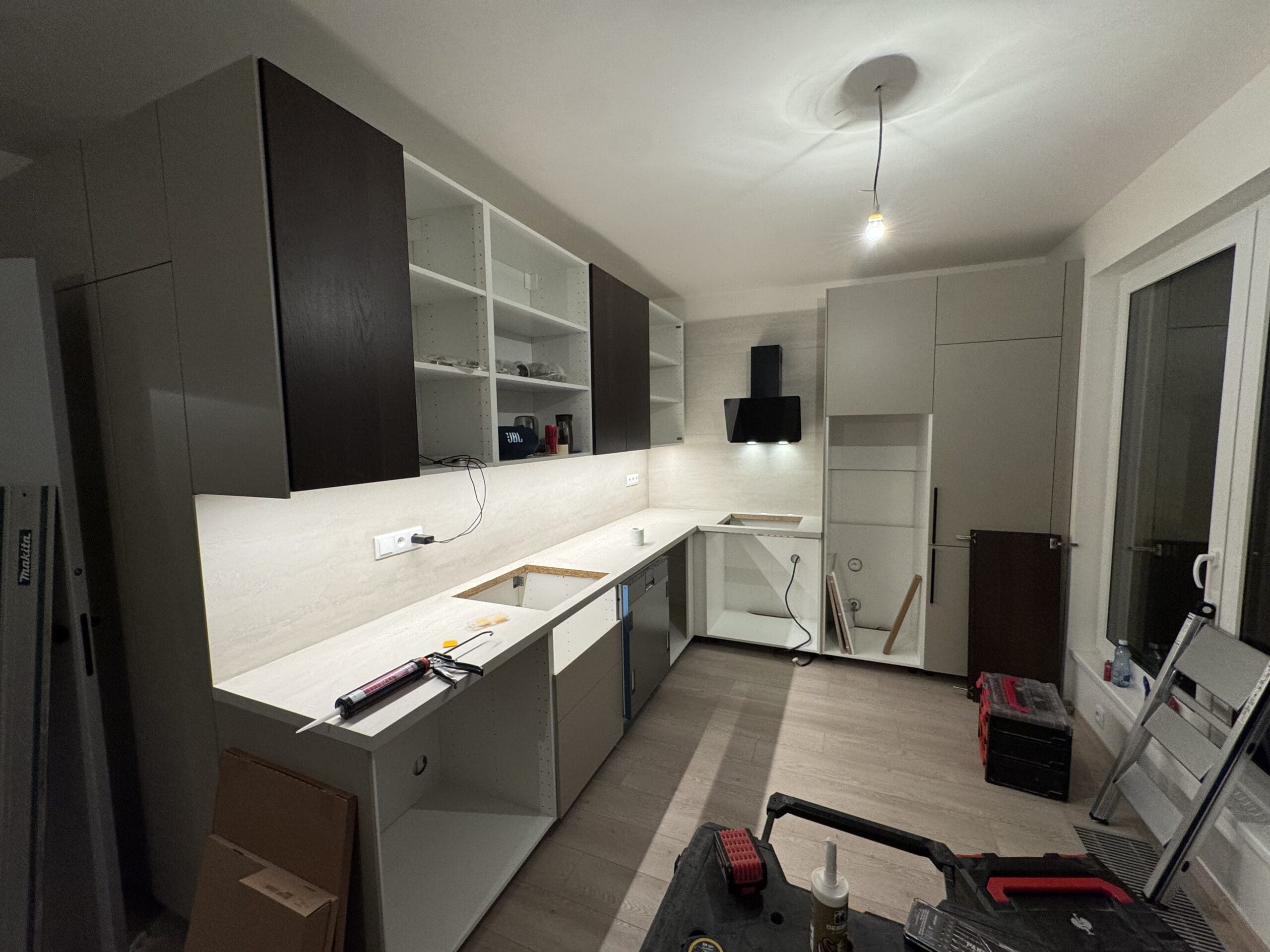
How much does it cost to install an IKEA kitchen and why can the price vary so much? Take a look at real-life installation experiences.

 Czech
Czech  German
  English